

The Top Landmarks, Monuments, Castles & Churches
to Discover in Antibes
Welcome to Antibes: Where History Meets the Mediterranean
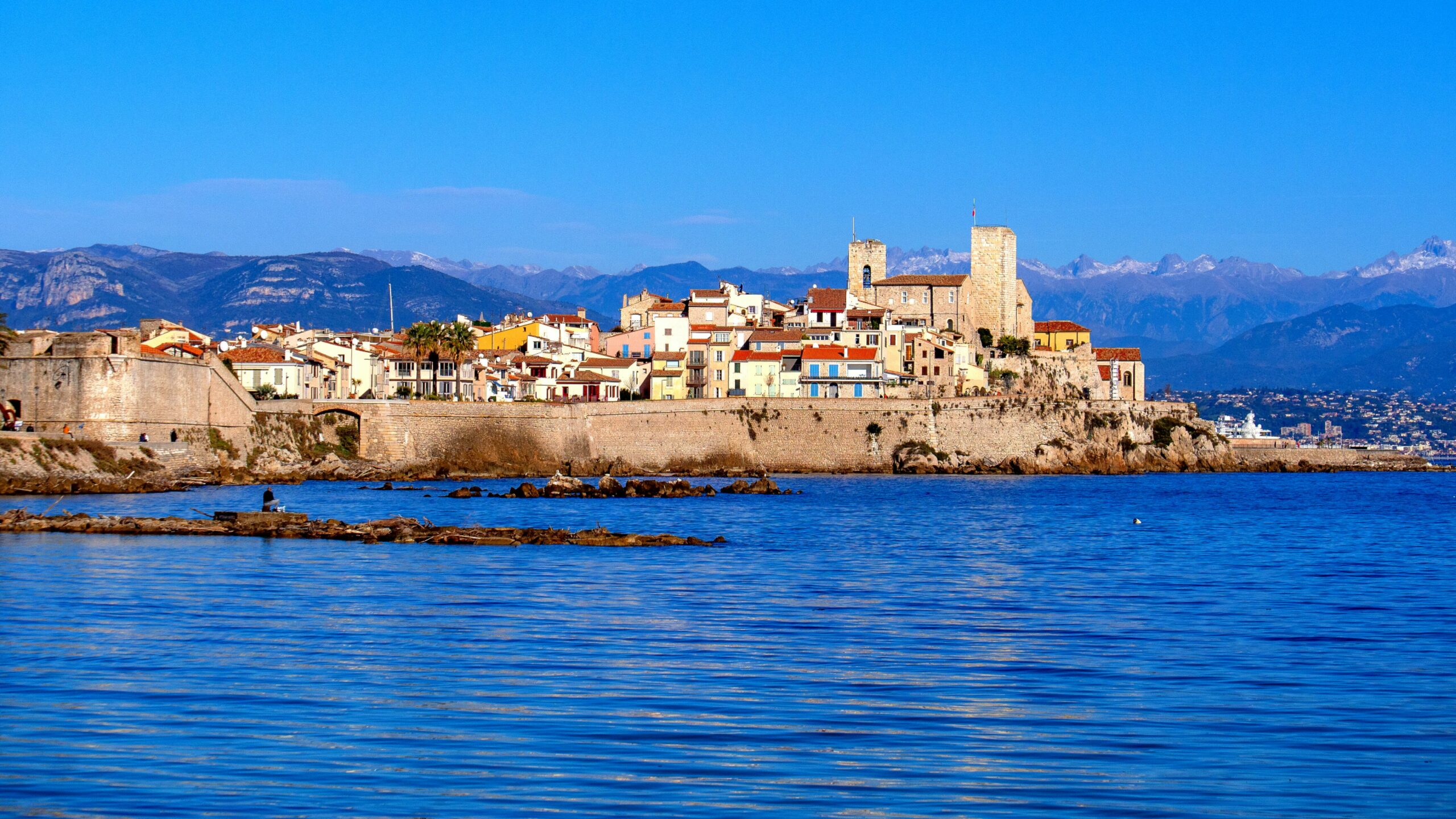
Nestled between the glamour of Nice and the allure of Cannes, Antibes is one of those rare places on the French Riviera where time seems to fold in on itself. Behind its sun-drenched façade of superyachts and seaside terraces lies a city with more than 2,500 years of history — a city that was already ancient when the Romans first set foot on its shores, that once served as the last French bastion against the Duchy of Savoy, and that seduced some of the greatest artists and writers of the 20th century with its particular quality of light.
I have walked these cobbled lanes dozens of times, and every visit reveals something new: a forgotten chapel tucked behind a linen shop, a stretch of rampart wall catching the golden hour, a bastion terrace from which the entire Bay of Angels unfolds like a painting. Antibes is a city you do not simply visit — you inhabit it, even if just for a day.
This guide takes you through the essential landmarks, monuments, castles, and churches you absolutely must discover here. I have included the history that gives each place its soul, along with practical tips and honest advice gathered over years of exploring this extraordinary corner of Provence.
1. Fort Carré — The Star-Shaped Sentinel of Antibes
If Antibes has one single emblem, it is Fort Carré. Visible from the train line that snakes between Nice and Cannes, its distinctive star-shaped silhouette rising above the harbour is one of the most recognisable images on the entire Côte d’Azur. And yet, despite its fame, surprisingly few visitors take the time to actually step inside — a mistake that would deprive you of one of the finest historical experiences the region has to offer.
The History: The fort’s origins date to the mid-16th century, when King Henri II of France needed a powerful military stronghold to guard the border with the County of Nice, which at the time belonged to the Duchy of Savoy. The original tower was gradually expanded into a full bastion fortress, but it was the legendary military architect Sébastien Le Prestre de Vauban who transformed it into what you see today. In the 1680s, Vauban — the man responsible for fortifying dozens of French cities — made a series of brilliant modifications, including replacing stone walls with brick in strategic places, a smart tactical decision since brick splinters were far less deadly than stone when struck by cannon fire. The result was a four-bastion fortress sitting 26 metres above the sea, virtually impregnable for its era.
Fort Carré has witnessed some remarkable moments in history. It was here that a young Napoleon Bonaparte was briefly imprisoned in 1794 during the political upheavals of the Revolution. The fort also holds the tomb of General Jean Étienne Championnet, a hero of the French Revolutionary Wars who established the short-lived Parthenopean Republic in Naples before dying in Antibes in 1800.
Inside the fortress walls you will find several bastions, an ancient chapel, and the Governor’s House. The surrounding four-hectare park is planted with typical Mediterranean flora, and a monumental 22-metre sculpture by Henri Bouchard — a solemn tribute to the 261 soldiers from Antibes who died in the First World War — stands watch along the main access path.
Practical Tips: The views from the fort are breathtaking, encompassing the Bay of Angels, the Old Town, Cap d’Antibes, and on clear days the snowcapped Alps in the distance. Allow at least two hours for a full visit. Opening hours vary by season: from June 15 to September 15, the fort is open daily except Mondays from 10am to 6pm; from September 16 to June 14, it opens from 10am to 5pm. It is closed on Mondays, January 1, May 1, November 1, and December 25. Note that the terrain includes slopes and stairs, making it challenging for visitors with limited mobility. Reservations are recommended, especially in summer, and can be made by telephone at +33 (0)4 92 90 52 13.

2. Château Grimaldi & the Picasso Museum
A Castle Reborn as a Temple of Art
Few museums in the world can claim as compelling a setting as the Musée Picasso in Antibes. Housed in the medieval Château Grimaldi — a 14th-century castle perched dramatically on the old ramparts overlooking the sea — it is simultaneously a superb art museum and a living piece of history. Even if you have only a passing interest in modern art, the building alone makes this visit essential.
The History: The site is ancient beyond reckoning. It was here that the Greeks of Marseille established the acropolis of their colony Antipolis around the 4th century BC. The Romans later built a castrum on the same foundations — you can still see those first few metres of Roman stonework in the castle walls today. During the Middle Ages the site passed through various hands before coming to the Grimaldi family of Genoa, who held it until the early 17th century when the French crown took possession of it. It subsequently served as the residence of the bishops of Antibes and later as an artillery barracks, before the city converted it into a museum in 1925.
Then came the pivotal autumn of 1946. Pablo Picasso, returning to the Mediterranean after years in wartime Paris, was invited by the museum’s curator to use the château’s top floor as his studio. Picasso, who was in love, energised, and full of post-war joy, threw himself into work with extraordinary intensity. From September to December of that year he created 23 paintings, 44 drawings, numerous ceramics, and a collection of lithographs — all infused with the sunlight, the sea, and the mythological spirit of the Mediterranean. When he returned to Paris, he left all of it to the city. The museum was officially renamed in his honour in 1966, becoming the first museum in the world dedicated solely to the artist.
Today the collection encompasses over 245 of his works from this period and beyond, alongside pieces by other significant artists including Joan Miró, Nicolas de Staël, Germaine Richier, and Bernard Pagès. The terrace that wraps around the castle is itself an open-air sculpture garden, with works displayed against the backdrop of the shimmering Mediterranean — an utterly unforgettable combination.
Practical Tips: Do not rush through the interior only to neglect the terrace — it is one of the most beautiful spots in all of Antibes. The museum provides bilingual placards in French, English, and Italian throughout, making it easy to follow the narrative of Picasso’s time here even without a guide. Budget at least 90 minutes. The museum is free of charge on the first Sunday of each month, making it a perfect option for travellers on a tighter budget.

3. The Cathedral of the Immaculate Conception
2,000 Years of Sacred History
Step through the carved wooden doors of Antibes Cathedral and you step back through two millennia. Classified as a Monument Historique and widely considered one of the finest churches on the French Riviera, this compact but remarkable building stands directly next to the Picasso Museum at the heart of the Old Town — their proximity is no coincidence, since both occupy the ancient acropolis of the Greek city of Antipolis.
The History: The cathedral was built in the 13th century on the foundations of a Roman temple dedicated to the goddesses Diana and Minerva, meaning the sacred nature of this site predates Christianity by many centuries. Over the following hundreds of years it was destroyed, altered, ravaged by wars and invaders, and painstakingly rebuilt, reaching its current form after a complete renovation in 1991. The result is an architectural palimpsest: Romanesque bones, Baroque embellishments, and a facade of bright pink and yellow ochre that is quintessentially Provençal.
The wooden doors are among the cathedral’s most celebrated features, intricately carved by the local artist Joseph Dolle in the 18th century. Inside, your eye is immediately drawn to the remarkable altarpiece from 1515 depicting the Virgin of the Rosary — one of very few surviving examples of this type in such complete condition anywhere in Europe. In one of the side chapels, a polychrome limewood recumbent statue of Christ Mort (the Dead Christ) commands particular attention for its extraordinary craftsmanship and emotional power.
The interior atmosphere is hushed and peaceful — a genuine sanctuary from the lively buzz of the market and streets just outside. Local worshippers still attend mass here regularly, giving the cathedral an authentic, lived-in spirit that many tourist churches lack.
Practical Tips: Entry is free, and the cathedral is almost always open during daylight hours. It is situated on a slight hill, so expect a gentle climb if you approach from the harbour side. Given its position immediately beside the Picasso Museum, combining both visits in a single morning is the obvious and ideal strategy. Dress modestly — shoulders and knees should be covered as a mark of respect.

4. The Cathedral of the Immaculate Conception
The Hidden Gem of the Old Town
If Antibes Cathedral is the well-known sacred landmark, the Chapelle Saint-Bernardin is its lesser-known, deeply enchanting counterpart. Tucked away on a quiet side street in the Old Town, this 16th-century Gothic chapel is easy to walk past without noticing — and that would be a genuine shame, because the interior is one of the most visually striking small religious spaces on the entire Côte d’Azur.
The History: The chapel was built in the early 16th century for the Brotherhood of the White Penitents of Saint Bernardin, one of the religious confraternities that played a significant social and charitable role in medieval and early modern Provençal life. Classified as a Monument Historique, it has been preserved with great care. From the exterior, it appears modest and almost deliberately unassuming — a plain stone façade that gives nothing away.
Step inside, however, and the transformation is complete. The walls and ceiling are covered in saturated, richly coloured frescoes that create an almost theatrical effect. Blues, golds, ochres, and deep reds create an atmosphere utterly unlike the airy restraint of the cathedral next door. Several interesting paintings line the walls, and the overall impression is of a deeply intimate sacred space — the kind of place where you instinctively lower your voice and slow your pace.
Practical Tips: Opening hours can be irregular, so I recommend attempting your visit in the late morning or early afternoon. Because it sees relatively few tourists, the chapel offers a rare sense of solitary discovery even in the height of summer. It is a wonderful ten-minute detour from the main tourist circuit, and one that genuinely rewards the curious traveller. Combine it naturally with a walk through the surrounding lanes of the Old Town, pausing to peer into courtyards and linger at the occasional square.

”"The colours here are extraordinary. The blue of the sea, the gold of the sun — I could not paint them fast enough."
Claude Moneton painting the French Riviera coast
5. Vauban Remparts and the Promenade Amiral de Grasse
Walking the City’s Ancient Walls
Not every landmark in Antibes is a building you enter — some are simply places you walk along, slowly, with the sea beside you and centuries of history underfoot. The ramparts of Antibes, much of which date to 1603, stretch along the southern edge of the Old Town, and the Promenade Amiral de Grasse that runs atop them is one of the most beautiful coastal walks in all of France.
The History: The ramparts were built during the late 16th and early 17th centuries as part of a broader effort to strengthen Antibes’ defences against invasion from the sea and overland from Savoy. Later reinforced under Vauban’s guidance, they created an almost unbroken wall of stone between the town and the Mediterranean. They also served the Château Grimaldi — the future Picasso Museum — which itself formed part of this defensive perimeter.
Walking the promenade today, you trace the line of these ancient walls while passing several of the city’s most important monuments in quick succession: the cathedral, the castle, and several old bastions including the Bastion Saint-Jaume, which now serves as a dramatic platform for one of Antibes’ most unusual modern artworks.
That artwork is the Nomade sculpture by the Barcelona artist Jaume Plensa, installed in 2007 on the terrace of the old Bastion de Saint-Jaume. Standing eight metres high, it depicts a seated human figure — but when you draw close, you realise the figure is composed entirely of interlocking letters in aluminium. The effect is haunting and beautiful, and at sunset or after dark when the sculpture is illuminated, it becomes genuinely magical. Plensa intended the letters to represent the constructive power of language and thought — fitting, perhaps, for a city that inspired so much great art and writing.
Practical Tips: The promenade offers some of the finest views in Antibes — across the Bay of Angels towards Nice, out to the Alps on clear days, and back into the coloured ochre walls of the Old Town. Evening is an especially rewarding time to walk it, as the yachts in Port Vauban light up and the last sun catches the sea. The walk from the cathedral end to the Bastion Saint-André takes roughly 20 to 30 minutes at a leisurely pace.

6. Port Vauban and the Old Town Ramparts
Europe’s Grandest Marina in a Historic Setting
Port Vauban is the largest marina in Europe, home to over 1,500 berths and an astonishing concentration of superyachts that makes it a spectacle in its own right. But what makes the port truly special — and what elevates it from mere marina to genuine landmark — is its extraordinary historical context.
The History: There has been a harbour at this site since before the Romans arrived. The ancient Greeks of Antipolis used it as their trading port; the Romans developed it further; and through the medieval and Renaissance periods it remained the commercial and military heart of the city. In the 1680s, Vauban — the same engineer who transformed Fort Carré — was commissioned to redesign and fortify the harbour as part of Louis XIV’s grand defensive programme for the southern coast of France. The fortifications Vauban constructed on the northern lip of the port — visible today as the Saint-Roch peninsula complex — gave the city its final form as a military stronghold and commercial harbour.
Today, moored where Roman galleys and medieval trading vessels once anchored, you will find some of the world’s largest private yachts — 80, 100, sometimes 150 metres long, gleaming white and bristling with technology. It is a surreal and somewhat dizzying contrast with the ancient stone ramparts behind them. The harbour has a particular fountain at the port entrance — a charming Provençal feature — and is a wonderful place to take an evening stroll along the quays, watching the lights of the yachts reflect in the water.
Practical Tips: The harbour itself is free to walk around and admire at any hour. For the best experience, arrive in the early evening when the light is golden and the yachting community is active on deck. The nearby Bastion Saint-Jaume terrace, home to the Nomade sculpture, is easily reached on foot and offers a superb elevated view of the entire port.

7. The Phare de la Garoupe
The Lighthouse at the End of the Cape
At the southern tip of the Cap d’Antibes, reached via the beautiful Sentier du Littoral coastal path or by a short drive through pine forests and grand villas, stands the Phare de la Garoupe — one of the most powerful lighthouses on the entire French Mediterranean coast.
The History: The lighthouse has guided sailors safely around the dangerous rocky cape for generations, and the 500-watt bulb that operates today has a range of 60 kilometres for sea vessels and an extraordinary 100 kilometres for aircraft and helicopters. The surrounding area is also home to two small chapels — the Chapelle de la Garoupe and the Oratoire de la Garoupe — both traditionally associated with the blessing of Antibes’ sailors and fishermen, a ritual that reflects the deep bond between this city and the sea that has sustained it for millennia.
Practical Tips: Climbing to the top of the lighthouse on days when it is open to visitors rewards you with panoramic views that encompass the entire sweep of coastline from Nice to Cannes, with the Alps forming a spectacular backdrop. Check opening hours locally, as access can be seasonal. If you are walking the Sentier du Littoral — which I strongly encourage — allow two to three hours for the full circuit of the cape, and wear comfortable walking shoes as parts of the path cross rocky terrain.

8. Tour Grimaldi
The Ancient Watchtower at the Heart of the City
The History: There is a particular poignancy to the tower’s origins, because the archives that might have told us precisely when and by whom it was built were themselves destroyed in the upheavals of history — a small irony for a building that has survived so much. What historians have been able to establish through architectural analysis and cross-referencing with regional records is that the tower was constructed after the Christian reconquest of the region from the Saracens, whose own centuries of occupation had left the coast depopulated and its infrastructure in ruins. The most probable construction date falls in the late 11th century, roughly contemporaneous with the famous Tour du Suquet in Cannes — which makes it one of the very earliest medieval structures on the entire Riviera, and a survivor of almost unimaginable rarity.
The tower was built during the period when the seigneury of Antibes was held by the family of Rodoard, a local noble lineage who controlled much of this stretch of coast. That seigneury passed to the bishops of Grasse in 1275, who exercised both spiritual and temporal authority over the city for more than a century. Then came the transaction that gave the tower its enduring name. In 1383, Pope Clement VII — himself embroiled in the chaos of the Great Schism that had fractured the medieval Church — pledged the seigneury of Antibes to the Grimaldi family of Genoa in exchange for the sum of 9,000 florins. The Grimaldis, a powerful noble dynasty with fingers in many of the strategic pies of the western Mediterranean, were already embedded in the region: it was the same family, from a different branch, that had established themselves as lords of Monaco barely a century earlier.
Antoine Grimaldi, who died in 1358, had founded the Antibes branch of the family, and it was his descendants who received and consolidated the seigneury following the papal pledge. The transfer of authority was not without complication — Pope Martin V, Clement VII’s successor, contested the arrangement and commissioned an archbishop to adjudicate the dispute, who ultimately confirmed the Grimaldis’ rights — but the family held their position through these challenges and through much else besides. For over two centuries, the tower that bore their name served simultaneously as a military stronghold, a symbol of dynastic power, and a visible assertion of Grimaldi authority over the city stretching out below it.
Practical Tips: The tower does not admit visitors to its interior, but this should not dissuade you from a thoughtful exterior visit. Approach it first from the Place de la Cathédrale, where you get the most dramatic sense of its height against the sky. Then take the narrow Rue du Saint-Esprit that runs along its eastern flank — one of the most atmospheric lanes in the entire Old Town, barely wide enough for two people to pass, lined in summer with cascading geraniums and smelling of sun-warmed stone. From here you can examine the stonework at close quarters and pick out the Roman blocks embedded in the medieval courses. Allow yourself 20 to 30 minutes — not to tick a box, but to actually look. The tower pairs absolutely naturally with a visit to the cathedral immediately beside it, and the contrast between the two buildings — one austere, military and pre-Romanesque in spirit, the other Baroque and festive — encapsulates the dual character of this remarkable corner of Antibes better than almost anything else in the city. If you have a particular interest in medieval military architecture, combining the Tour Grimaldi with a visit to Fort Carré makes for an illuminating half-day that traces the full arc of Antibes’ defensive history across five centuries.

9. Peynet Museum
A Museum Born from Love
The History: The museum is dedicated to the life and work of Raymond Peynet, born in Paris on 16 November 1908 — a man who spent six decades filling the world with tenderness, wit, and one of the most universally recognised couples in the history of graphic art: Les Amoureux de Peynet, Peynet’s Lovers.
Peynet began his professional life in 1930 at the prominent advertising agency Tolmer, where his natural facility for line and his ability to communicate warmth and humour through the simplest of drawings quickly distinguished him. He began selling work to the major French daily newspapers and illustrated magazines, developing a range and confidence that would eventually allow him to move fluidly between press cartoons, advertising illustration, theatrical décor, and fine-art printmaking. But his fame, and his enduring legacy, rests on a single moment of inspiration that occurred in 1942 — or 1943, depending on which source you consult, with both dates appearing in respected accounts — when Peynet found himself waiting in front of the small bandstand in Valence. There, in the kiosque, a young violinist was playing. Whether it was the music, the afternoon light, the particular quality of his own mood that day, or simply the accumulation of all the tender imagery of love that he had been carrying inside him for years, something crystallised. He pulled out a sketch pad and drew: a small, doe-eyed young woman in a wide-brimmed hat and elegant dress, listening with her whole being to a dreamy, long-limbed, poetic young man playing his violin in the bandstand. The drawing was slight, intimate, entirely without pretension.
He showed it to Max Favalelli, the sharp-eyed editor-in-chief of the magazine Ric et Rac. Favalelli immediately understood what he was looking at. He gave the couple a name — Les Amoureux, The Lovers — published the sketch, and a phenomenon was born. What followed across the next four decades was something close to a cultural miracle: Peynet’s Lovers appeared everywhere and on everything. They populated the pages of French newspapers and international magazines. They adorned Rosenthal porcelain dinner services and Baccarat crystal glassware. They appeared on silk scarves, on official postage stamps in multiple countries, on gold jewellery by Murat, on theatrical sets for productions from Paris to Tokyo. A statue of the Lovers was installed at the Peace Memorial in Hiroshima — a gesture that transformed the couple into an international symbol of reconciliation and hope, their gentle tenderness placed deliberately against the most catastrophic act of destruction in modern history.
Practical Tips: The museum is located directly on Place Nationale, and the approach is itself part of the pleasure: the square’s plane trees, its small bandstand that echoes the kiosque de Valence, the gentle hum of the nearby market, and the bronze sculpture of the Lovers — tenderly embracing at the museum’s entrance — create an atmosphere of unhurried charm that is the perfect preamble to what awaits inside. The bronze Lovers are one of the most genuinely sweet photo opportunities in Antibes — not the forced, tourist-trap variety, but something that almost everyone who passes feels moved to participate in, regardless of age or inclination.
Entry is very affordable at €3 for adults, with reduced rates at €1.50 for students, senior visitors, large families, and teachers. Under-18s enter free, as do visitors with disabilities and their companions. On Saint Valentine’s Day each year, the museum extends free entry to absolutely everyone — an annual gesture of generosity that perfectly captures the spirit of the place. Tactile reproductions of selected works can be made available on advance request for visually impaired visitors, making this one of the more thoughtfully accessible museums on the Riviera. Opening hours run Tuesday through Sunday from 10am to 12:30pm and 2pm to 6pm during the main season (February to October), with slightly reduced hours from November to January. The museum is closed on Mondays and public holidays.