

French Riviera's Treasures
The French Riviera (or Côte d’Azur) stretches roughly from Menton to Saint-Tropez. It is a mosaic of atmospheres: aristocratic in Monaco, artistic in Nice, perched and medieval in Èze, glamorous in Cannes, maritime in Antibes, and wild in the Esterel. What unites them is a sense of effortless beauty—sun-drenched terraces, turquoise coves, and a rhythm of life that invites you to slow down, savour, and wander.
The Three Corniches: Legendary Scenic Road
The Corniches are among the Riviera’s most iconic experiences. They offer some of the most dramatic coastal views in Europe.
1. The Basse Corniche (Lower Corniche)
Running close to the sea from Nice to Menton, this road passes through elegant seaside towns.
- Atmosphere: lively, accessible, dotted with beaches and marinas.
- Stops to enjoy:
- Villefranche-sur-Mer — a perfect natural harbour with pastel houses and a sandy beach.
- Beaulieu-sur-Mer — Belle Époque villas and the Greek-style Villa Kérylos.
- Menton — citrus gardens, Italian charm, and a microclimate that feels almost tropical.
- Tip: Take it early in the morning when the sea is calm and the light is soft.
The Basse Corniche is the Riviera’s most intimate road, tracing the coastline so closely that at times you feel the sea might reach out and touch your wheels. It passes through towns that seem sculpted from sunlight: Villefranche-sur-Mer with its amphitheater of pastel houses, Beaulieu-sur-Mer with its Belle Époque villas, and Menton with its Italianate charm and gardens bursting with citrus.
Walking through Villefranche’s old town feels like stepping into a watercolor painting — narrow alleys washed in pinks and ochres, laundry fluttering above your head, the scent of the sea drifting through every doorway. In Menton, the air is softer, warmer, almost tropical. The façades glow like ripe fruit, and the sea laps gently at the promenade.
Travel Tip: Take this road early in the morning. The light is gentle, the sea is calm, and the Riviera reveals its quietest, most poetic face.
2. The Moyenne Corniche (Middle Corniche)
This is the most panoramic of the three.
- Atmosphere: dramatic cliffs, sweeping views, and perched villages.
- Unmissable stop:
- Èze Village — a medieval eagle’s nest suspended above the sea. Wander its stone alleys, visit the exotic garden, and enjoy one of the most breathtaking viewpoints on the Riviera.
- Tip: Park at Èze-sur-Mer and hike the Nietzsche Path up to the village for a memorable ascent.
The Moyenne Corniche is a road of drama and grandeur. It clings to the cliffs high above the sea, offering sweeping panoramas that seem almost unreal. This is the road that leads to Èze Village — a medieval eagle’s nest perched 400 meters above the Mediterranean.
Èze is a place where time slows. Its stone alleys twist like vines, its archways frame glimpses of the sea far below, and its exotic garden crowns the village with statues, succulents, and silence. Standing at the top, the world feels vast and luminous, the horizon stretching endlessly toward Italy.
Travel Tip: Park at Èze-sur-Mer and hike the Nietzsche Path. The ascent is steep but unforgettable — a journey through light, rock, and sea that inspired the philosopher himself.
3. The Grande Corniche (Golden Corniche)
Built by Napoleon, this is the highest and wildest road.
- Atmosphere: cinematic, remote, and spectacular.
- Highlights:
- La Turbie — home to the Roman Trophy of Augustus.
- Panoramas — views stretching from Italy to Saint-Tropez on clear days.
- Tip: Drive it at sunset; the light over the Mediterranean is unforgettable.
The Grande Corniche is the Riviera at its most cinematic. Built by Napoleon, it rises above the coastline like a ribbon of stone suspended between earth and sky. Here, the landscape becomes wilder: cliffs carved by wind, pine forests whispering in the breeze, and views that stretch from the Italian border to the distant Esterel.
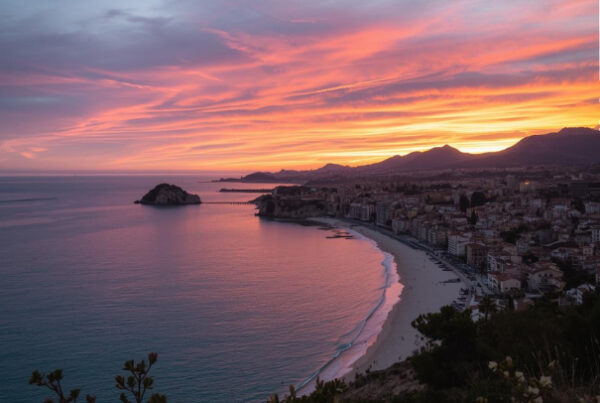
La Turbie, with its Roman Trophy of Augustus, stands as a reminder that this coastline has been admired for millennia. At sunset, the sky turns rose‑gold, the sea becomes a sheet of molten silver, and the Riviera feels like a world suspended outside of time.
Travel Tip: Drive it at dusk. The light transforms every curve into a painting.
Cities and Towns to Discover
Nice — The Cultural Heartbeat
Nice is a city of contrasts: Italian façades, French boulevards, and a Mediterranean soul. The Promenade des Anglais curves along the sea like a blue silk ribbon, while the Old Town hums with life — Baroque churches, market stalls overflowing with flowers and spices, and tiny restaurants where the scent of socca drifts into the streets.
Climb Castle Hill for a panorama that captures the essence of Nice: the Baie des Anges shimmering below, the terracotta rooftops glowing in the sun, and the Alps rising in the distance like a protective wall.
Travel Tip: Try socca at Chez Pipo — crisp, warm, and deeply Niçois.
- What to explore:
- Promenade des Anglais — the iconic seafront.
- Old Town (Vieux-Nice) — narrow alleys, Baroque churches, and the Cours Saleya market.
- Castle Hill — panoramic views and a refreshing escape from the city heat.
- Experience tip: Try socca, the local chickpea pancake, at Chez Pipo or in the old town.
Antibes — Where the Sea Meets the Soul
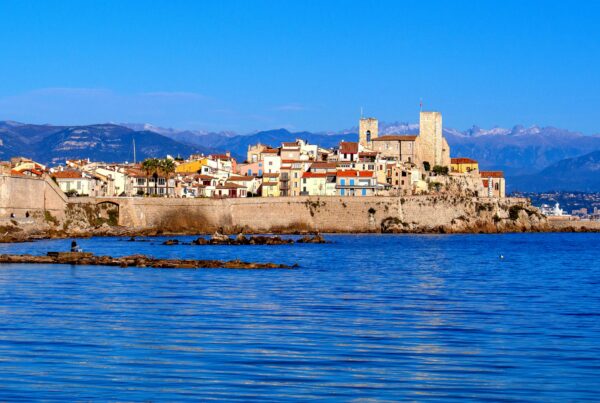
Antibes is a town shaped by the sea. Its ramparts stand proudly against the waves, its old town is a maze of stone alleys and Provençal colors, and its port hosts some of the world’s most impressive yachts. Yet Antibes remains deeply human, deeply artistic.
Picasso once lived here, painting with the sea breeze drifting through his windows. Today, the Picasso Museum preserves that spirit — a dialogue between art, stone, and horizon.
Cap d’Antibes is a world of its own: pine forests, secret coves, and a coastal path where the rocks glow white against the turquoise water.
Travel Tip: Walk the Sentier du Littoral early in the morning when the sea is glassy and the air smells of pine.
Cannes — Glamour with a Gentle Heart
Cannes is often associated with red carpets, but its true charm lies in its contrasts. La Croisette sparkles with luxury, yet just behind it, the old town of Le Suquet rises in a quiet tangle of cobblestone streets and warm façades.
From the top, the bay unfolds like a vast amphitheater of light. Offshore, the Lérins Islands float like emeralds on the sea — peaceful, monastic, timeless.
Travel Tip: Take a boat to Saint-Honorat for a day of silence, vineyards, and crystalline coves.
- What to enjoy:
- La Croisette — palm-lined promenade with luxury boutiques.
- Le Suquet — the old town with views over the bay.
- Lérins Islands — a short boat ride away, offering nature, monasteries, and crystal-clear waters.
- Experience tip: Visit in the early evening when the light softens and the city glows.
Monaco — Vertical Elegance
Monaco is a principality built upward rather than outward. Its cliffs, towers, and terraces create a vertical cityscape that feels almost futuristic. Yet the old town on the Rock remains a haven of calm — narrow streets, pastel houses, and the palace overlooking the sea.
The Oceanographic Museum, perched on a cliff, seems to grow out of the rock itself. Below, Port Hercule glitters with yachts and reflections of city lights.
Travel Tip: Walk the coastal path to Cap d’Ail — a succession of hidden beaches and sculpted rocks.
- Must-sees:
- Monte-Carlo Casino — Belle Époque architecture and cinematic atmosphere.
- The Rock (Le Rocher) — old town, palace, and oceanographic museum.
- Port Hercule — luxury yachts and lively terraces.
- Experience tip: Walk the coastal path from Monaco to Cap d’Ail for hidden beaches and dramatic cliffs.
Menton — The Garden of the Riviera
Menton is the Riviera’s gentle soul. Sheltered by mountains, it enjoys a microclimate that nurtures citrus trees, exotic gardens, and a slower rhythm of life. The old town rises in layers of pastel, each stairway revealing a new angle of sea and sky.
The Val Rahmeh Garden is a world of its own — bamboo groves, tropical flowers, and quiet ponds where time seems to pause.
Travel Tip: Taste Menton’s lemon liqueur or a lemon tart — the fruit here is legendary.
- What to explore:
- Old Town — pastel facades and steep stairways.
- Val Rahmeh Botanical Garden — exotic plants from around the world.
- Lemon Festival (Fête du Citron) — a unique celebration of citrus.
- Experience tip: Try a lemon-infused dish or liqueur; Menton’s lemons are famous.
”When I realized that each morning I would see this light again, I could not believe my good fortune.
Henri MatisseQuand j’ai compris que chaque matin je reverrais cette lumière, je ne pouvais croire à mon bonheur.
Natural Wonders
Cap d’Antibes
A peninsula of pine forests, rocky coves, and villas hidden behind stone walls. The air smells of resin and salt, and the sea shifts from deep blue to translucent turquoise.
Travel Tip: Visit the Garoupe Lighthouse for one of the Riviera’s most poetic viewpoints.
The Esterel Massif
A landscape of red volcanic rock plunging into the sea. The contrast between the fiery cliffs and the blue water is breathtaking, especially at sunset.
Travel Tip: Drive the Corniche d’Or or hike Cap Roux for unforgettable views.
The Lérins Islands
Two islands facing Cannes — Sainte-Marguerite with its forests and coves, Saint-Honorat with its monastery and vineyards. Both offer a sense of peace rarely found on the mainland.
Travel Tip: Bring water shoes — the rocky shores hide some of the clearest waters on the Riviera.
Moving Around — Travel Tips for a Smooth Journey
Moving around the French Riviera is not simply a matter of transportation; it is a way of experiencing the coastline’s rhythm. Distances are short, but the landscapes shift constantly — from the deep blues of the Baie des Anges to the cliffs of Èze, from the palm-lined boulevards of Cannes to the pastel stairways of Menton. The journey becomes part of the pleasure. Trains glide along the sea like silver threads, offering windows that frame the Mediterranean as if it were a moving painting. Buses climb into the hills, revealing villages perched like stone crowns above the coast. Cars wind along the Corniches, each curve opening onto a new panorama of sky and water. Even walking becomes a form of meditation here: coastal paths where the sea breathes at your feet, old towns where every alley tells a story, and promenades where the light shifts from gold to rose as the day unfolds. On the Riviera, movement is never rushed — it is a gentle dance between land, sea, and light.
• Train: Fast, scenic, ideal for major towns.
• Bus: Perfect for hilltop villages.
• Car: Best for the Corniches and remote coves.
• Walking: Essential for old towns and coastal paths.
• Boats: Ideal for islands and coastal transfers.
Insider Tip: In summer, travel early or late to avoid traffic and enjoy the Riviera’s most magical light.
Food, Markets, and Local Experience
Food on the French Riviera is not merely nourishment; it is a celebration of sun, soil, and sea. Markets open early, their stalls overflowing with tomatoes still warm from the fields, lemons glowing like small suns, olives glistening in their brine, and herbs that perfume the air with thyme, basil, and wild rosemary. In Nice, the Cours Saleya awakens with the sound of vendors calling out their produce, the scent of fresh flowers, and the irresistible aroma of socca crisping on a hot pan. In Antibes, the Marché Provençal feels like a living tapestry of colors and voices, where artisans offer honey, cheeses, and tapenades that taste of the Mediterranean. Menton adds its own sweetness with citrus jams and pastries infused with its legendary lemons.
Dining here is an experience shaped by light and time. Long lunches under vine-covered terraces, seafood eaten with the sound of waves nearby, rosé chilled to perfection, and evenings where the scent of grilled fish mingles with the warm breeze. Local dishes — pissaladière, pan bagnat, bouillabaisse, farcis niçois — carry the memory of generations. And beyond the food, there are rituals: strolling through a market at dawn, sharing a plate of olives at sunset, tasting a wine from Bellet or Bandol while the cicadas sing. To eat on the Riviera is to taste its landscapes.
- Morning markets
- : Nice (Cours Saleya), Antibes (Marché Provençal), Menton (Halles).
- Local dishes: socca, pissaladière, pan bagnat, bouillabaisse, farcis niçois.
- Wine regions: Bellet (Nice), Bandol (west of the Riviera), and Provence rosés.
Experience tip: Book a table at a seaside restaurant for a late lunch—Mediterranean meals are meant to be slow and sunlit.
Tips for Getting Around the Rivier
Traveling the Riviera becomes effortless with a few well-chosen habits. The train is your most reliable companion: it runs like a blue thread along the coast, connecting all major towns with speed and ease, and offering views that rival any postcard. For hilltop villages such as Èze or Saint-Paul-de-Vence, buses are essential — they climb where trains cannot, weaving through pine forests and terraced hillsides. Renting a car gives you freedom to explore the Corniches, the Esterel, or the hidden coves of Cap d’Antibes, but parking can be challenging in summer, so early mornings and late afternoons are your allies. Walking is often the most rewarding way to discover the Riviera’s soul: old towns reveal their charm only on foot, and coastal paths offer some of the most intimate encounters with the sea.
Boat shuttles open another dimension — a quiet crossing to the Lérins Islands, a coastal hop between Nice and Monaco, or a sunset cruise that paints the sky in shades of rose and gold. In summer, the key is timing: travel early to avoid crowds, rest during the heat of the afternoon, and let the evening breeze guide your steps. The Riviera rewards those who move with intention, curiosity, and a willingness to let the journey unfold at its own pace.
- Train: The easiest way to move between major towns (Menton–Monaco–Nice–Antibes–Cannes). Scenic, frequent, and avoids traffic.
- Bus: Cheap and useful for hilltop villages like Èze or Saint-Paul-de-Vence.
- Car: Ideal for exploring the Corniches, Cap d’Antibes, the Esterel, or remote coves.
- Tip: Parking can be difficult in summer—arrive early or late.
- Walking: Many of the best experiences are on foot—coastal paths, old towns, and viewpoints.
- Boat shuttles: Perfect for the Lérins Islands, Monaco–Nice transfers, or coastal excursions.
Weather Bonus
Between November and March, Antibes has an average of 150 sunny days. It can rain, certainly, but radiant days are numerous. And when the sun returns after rain, the light is extraordinary. Photographers know it: Mediterranean winter is their favorite season.